
Insights
Field notes on ambient scenting.
Practical writing on signature design, coverage, HVAC integration, service operations, and the commercial logic of scent. Written by the team building it, not by an agency.
Featured Article
Featured Reading.
Founder-written field notes on scent, signal, and commercial outcome.
 SCIENCE
Cold-air vs ultrasonic: why pros never use ultrasonic.
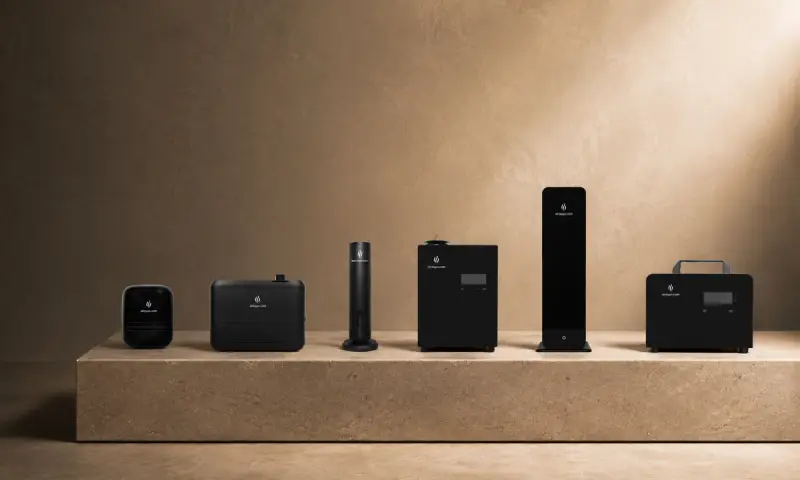
Every professional scent installation we have ever done uses cold-air diffusion. We have never installed an ultrasonic diffuser in a commercial space. This is not a commercial preference. It is an engineering conclusion reached after testing both categories in controlled conditions. This is the honest technical comparison. The mechanism difference To understand why cold-air wins, you need to understand what each technology actually does. Ultrasonic diffusers use a vibrating piezoelectric disc submerged in water. The vibration creates ultrasonic waves that shatter the water surface into a mist of micro-droplets. The essential oil or fragrance is mixed into the water reservoir. The resulting mist carries both water vapour and fragrance particles into the air. Cold-air diffusers use a pressurised air pump to force air through a nebuliser nozzle. The nozzle atomises the fragrance concentrate (no water) into particles in the range of 1 to 5 microns. These particles are light enough to remain suspended in the air and travel with the existing airflow — HVAC, natural convection, or forced circulation. The key word in that second description is concentrate. Cold-air diffusers use pure fragrance oil, undiluted. Ultrasonic diffusers use fragrance diluted in water. Problem 1: Dilution A typical ultrasonic diffuser reservoir holds 100 to 500 ml of water. The manufacturer recommends 3 to 10 drops of essential oil per fill. That is an oil concentration of 0.1 to 0.5%. At 0.1 to 0.5% concentration, the diffusion output is mostly water vapour with trace fragrance. In a 15-square-metre room with no ventilation, that concentration may be perceptible. In a 200-square-metre retail floor with an active HVAC system pulling 6 to 8 air changes per hour, it disappears within thirty seconds of leaving the nozzle. Cold-air diffusers use undiluted fragrance concentrate at 10 to 30% perfumer's concentration. The output is pure fragrance mist. The same air changes that destroy an ultrasonic signal carry a cold-air signal through the space. Problem 2: Particle size The ultrasonic process creates water droplets of 1 to 10 microns. The problem is the water. A 5-micron water droplet evaporates within 30 to 60 seconds at normal indoor humidity. As the water evaporates, the fragrance compounds bound to it also disperse — they do not stay suspended as free particles. Cold-air atomisation creates dry fragrance particles of 1 to 5 microns directly. Without water, there is no evaporation collapse. The particles remain suspended and travel with the airstream. In a space with good air circulation, a cold-air particle can travel 10 to 15 metres from the diffusion point before settling. This is the reason cold-air diffusion is specified for hotel lobbies with 6-metre ceilings. The particle reaches the ceiling zone. The ultrasonic mist does not. Problem 3: Oil degradation Ultrasonic diffusers require that the fragrance oil be mixed with water and sit in the reservoir, sometimes for days. Fragrance compounds — especially top notes built on citrus, aldehydes, and light florals — begin degrading in contact with water within 24 to 48 hours. The practical effect: a reservoir filled on Monday smells sharp on Monday. By Thursday, the same reservoir smells flat, muted, and slightly stale. The staff have stopped noticing. The guests have not. Cold-air diffusion draws directly from a sealed fragrance cartridge. The oil is not exposed to water or air until the moment of atomisation. A 250-ml cartridge in a cold-air unit has a consistent aromatic profile from first use to last drop. Problem 4: Maintenance and scale An ultrasonic unit with a 300-ml reservoir, running 8 hours per day at medium intensity, lasts approximately 6 to 8 hours before the reservoir is exhausted. For a single residential room, this is manageable. For a 20-outlet retail chain, this is a daily operational task per outlet — refill the reservoir, clean the disc (ultrasonic discs calcify with hard water), verify the output. Cold-air diffuser cartridges at commercial concentration run 14 to 30 days depending on intensity and operating hours. The units have zero daily maintenance requirements. Remote fault monitoring is standard on IoT-enabled hardware. A pan-India retail rollout can be managed centrally with scheduled cartridge delivery. Operational scalability is not incidental. It is why ultrasonic diffusion has never been adopted for commercial use by any serious operator. The labour economics do not work beyond a handful of units. What ultrasonic diffusers are actually for Ultrasonic diffusers are well-engineered for a specific context: a personal space of 10 to 20 square metres, with calm or no air movement, used intermittently, and cleaned regularly. A study room. A yoga corner. A small home office. In that context, they work. The dilution and particle-size limitations are acceptable. The aesthetic — the mist plume, the quiet hum — is part of the product experience. They are not defective products. They are consumer products being used in the wrong context when installed commercially. The problem is that they are priced accessibly and available everywhere, which means procurement teams sometimes specify them for commercial spaces where cold-air is the correct answer. The result is a system that performs adequately in the store manager's office and invisibly in the 400-square-metre trading floor they were asked to cover. The heat diffuser case A third category exists: heat diffusers, which use a warm plate or lamp element to volatilise fragrance oil. These are worse than ultrasonic for commercial use because heat alters the aromatic chemistry of the oil. Fragrance is built from volatile organic compounds with different boiling points. The top notes — the first impression — have the lowest boiling points. Heat preferentially drives off the top notes first, leaving a progressively heavier, duller, and often sharper residual. A jasmine fragrance volatilised by heat for four hours smells like the base note of a jasmine fragrance — which is to say, it smells like something adjacent to jasmine but not like jasmine. Cold-air nebulisation does not add energy to the oil. It mechanically atomises it. The aromatic profile of the oil in the cartridge is the aromatic profile in the air. Specification summary If you are evaluating diffusion hardware for a commercial space above 50 square metres, the specification is cold-air. The ultrasonic diffuser on the procurement list is a consumer product. The performance gap in your trading environment will be visible from day one. Cold-air diffusers cost more. They cost more for the same reason a commercial kitchen range costs more than a domestic one: the engineering tolerances, the duty cycle, and the output consistency are different categories of product. The commercial case for fragrance in your space is hard enough to prove without a hardware choice that makes the fragrance invisible by lunchtime.
"The ultrasonic diffuser is the consumer product. Cold-air is the infrastructure."
 GUIDES
What is scent marketing? A B2B operator's guide.
Scent marketing is the deliberate use of fragrance to shape how a commercial space is perceived, remembered, and described. It is not air freshener. It is not masking. It is a managed sensory input, engineered to a brand brief and measured against commercial outcomes. The discipline has been practiced in hotel groups and luxury retail since the 1990s. In India, it arrived in serious form around 2018 — first in five-star hospitality, then in fashion retail, and now across offices, healthcare, and automotive showrooms. This is the guide for the B2B buyer who has heard the term and wants the unvarnished version: what it actually is, how it works, what it costs to do properly, and what the evidence says. What scent marketing is not Before the definition, the negatives — because the category is full of noise. It is not air freshener. Air freshener masks odours at high intensity and fades inside forty minutes. Scent marketing operates at a fraction of that intensity, continuously, with a fragrance chosen for brand resonance rather than odour neutralisation. It is not aromatherapy. Aromatherapy is a therapeutic practice using essential oils at concentrations that affect physiology. Scent marketing uses commercial IFRA-certified fragrances at ambient concentrations — below any therapeutic threshold. It is not a plug-in diffuser from a pharmacy. Those units use heat, which changes the aromatic profile of the oil and degrades quickly. Professional scent marketing uses cold-air or HVAC diffusion with oil formulated for commercial volumes and consistent projection. The gap between consumer diffusion and commercial diffusion is the gap between a table fan and a commercial HVAC system. Same category, different engineering. The commercial case Three outcomes are consistently measured across scent marketing installations. They are not theoretical. They are measured by operators who ran control conditions. Dwell time. Scented retail environments hold customers longer. The most-cited academic study (Spangenberg, Crowley & Henderson, 1996) showed a 31.8% increase in perceived time in a scented store versus an unscented one. More recent commercial data from Indian retail installers shows 8 to 14% increases in actual dwell time. Transaction value. Longer dwell converts to larger baskets. Our installation at Sportsyard in Bangalore returned a 30% increase in average transaction value against a pre-install baseline over the measured period. Brand recall. Scent is processed by the olfactory bulb, which connects directly to the hippocampus and amygdala — the memory and emotion centres. A signature scent is retrieved as an emotional memory, not a factual one. This is why guests can identify a hotel brand by smell alone. The Mandarin Oriental's fragrance is not a marketing claim. It is a coded memory trigger. The workplace case adds a fourth outcome: productivity and focus. This is the application most operators are sceptical about until they see the post-install self-report data from their own teams. The mechanism is real. Lavender reduces cortisol. Citrus increases alertness. The effect sizes are modest. They are also consistent. How it works operationally A commercial scent marketing installation has three components: the fragrance, the hardware, and the managed service. The fragrance is a commercial concentrate, IFRA-certified, and formulated to project correctly at the intended intensity and coverage. It is not a retail perfume. Retail perfumes are designed to project from skin heat. Commercial fragrance is designed to diffuse from cold-air or HVAC systems into volumes ranging from 200 to 50,000 square feet. The hardware falls into three categories: Cold-air diffusion is the professional standard. It pumps micronised oil (sub-5 micron droplets) into the airstream without heat, water, or chemical propellant. The oil is not altered. The coverage is consistent. The unit runs on a schedule. The managed service is where most operators underestimate the requirement. A fragrance system requires refills every 30 to 60 days, depending on intensity and operating hours. It requires annual intensity calibration as the building's HVAC changes. It requires a vendor who answers when the unit throws a fault code at 7 AM on a Saturday before a wedding. The operators who have the worst experience with scent marketing are the ones who treated it as a one-time purchase. The ones who have the best experience treat it as a utility — managed, renewed, and audited. What IFRA certification means and why it matters Every fragrance we produce is IFRA-compliant. IFRA is the International Fragrance Association, the global body that sets safety standards for fragrance compounds. Compliance means the fragrance has been formulated within the concentration limits that IFRA's toxicology panels have determined are safe for human exposure in the relevant application. For a B2B buyer, IFRA certification means two things practically: Liability. If a guest or employee has a documented adverse reaction to an IFRA-compliant fragrance at correct diffusion intensity, the operator's liability position is defensible. Without certification, it is not. Procurement. Most institutional buyers — hotel chains, healthcare networks, corporate facilities managers — now require IFRA compliance as a tender condition. We ship MSDS documentation with every fragrance batch. Phthalate-free is an additional requirement many buyers specify. All Airosyn fragrances are phthalate-free. Phthalates are plasticising agents that can act as endocrine disruptors. They are increasingly excluded from commercial fragrance briefs. The Indian market context India's scent marketing market is approximately five to seven years behind Southeast Asia and fifteen years behind Europe. That gap is closing fast, for three reasons. Premium retail is national now. A brand with 150 stores across India cannot manage scent store-by-store with locally sourced solutions. It needs a vendor who can deploy a consistent signature from Mumbai to Chandigarh in a single rollout. That infrastructure now exists in India. Hospitality expectations have risen. International hotel brands entering India have established the category norm. Domestic groups now compete against that standard. The Marriott lobby in Pune set the baseline. The independent hotel three blocks away is now judged against it. The economics work at Indian scale. Cold-air diffusion hardware has commoditised. Fragrance production at scale in India is cost-competitive with imports. A commercial scent installation for a 2,000-square-foot store now costs less than a month's spend on Meta ads for the same store. The ROI conversation is no longer theoretical. How to start If you are evaluating scent marketing for the first time, the sequence is: Write the brief before talking to any vendor. Three brand adjectives. One sentence about the building. One fragrance family to avoid. This takes twenty minutes and will save you six weeks. Request samples. Any serious vendor will dispatch a physical sample kit for shortlisted fragrances. Do not make a decision based on descriptions. Install on a single site first. A flagship or highest-traffic location. Run for sixty days with a before-and-after baseline on the metric that matters (basket size, dwell time, NPS, whatever the operating goal is). Negotiate the managed service, not just the hardware. The fragrance is a consumable. The service contract is where the long-term value lives. Ask about refill scheduling, remote diagnostics, and annual audit protocols before you sign. The signature scent for your business is a brand asset. Unlike most brand assets, it has a measurable effect on the revenue outcome. Treat it accordingly.
"Scent marketing is the only brand asset you experience before you see anything."
 GUIDES
How to choose a signature scent for a hotel without sounding like every other hotel.
A guest walks into a hotel lobby. They have eight seconds before their nose decides whether the place is worth the rate. In those eight seconds, three things compete for attention: the building, the brand, and whatever fragrance the GM signed off six months ago. If the fragrance is generic, the brand loses. If it is overdone, the building loses. If it disagrees with the rate card, both lose. This is the working framework we use after forty hotel installs across India. It is not a fragrance lecture. It is a brief-writing tool for the person who has to decide, defend, and renew the choice. Why hotels smell the same Most hotels smell of three notes. White tea. Bergamot. A vague woody base. The reason is structural, not lazy. The category-default fragrance was perfected by one global vendor in the late 2000s, then copied by every regional vendor that followed. It works. Guests do not complain. The brand becomes invisible. Invisible is the failure mode. The point of a signature is not to avoid offence. The point is to be the smell guests remember when they think about whether to come back. "Invisible is the failure mode. The point of a signature is to be the smell guests remember when they think about whether to come back." Step 1 · Brand voice in three adjectives Write three adjectives that describe the brand. Not the lobby. Not the bar. The brand. They must be specific enough to fail. Examples that work: Confident, restrained, coastal. Heritage, warm, slightly austere. Sharp, modern, untropical. Examples that fail: Premium, luxurious, refined. Welcoming, comfortable, memorable. Elegant, sophisticated, unique. The failed examples describe every hotel in the world. The working examples eliminate at least seven of the twelve signatures in our library on the first read. If your three adjectives could describe a competitor's hotel without changing a word, rewrite them. Your brief is not specific yet. Step 2 · Location in one sentence The signature has to honour the building, not fight it. Write one sentence about what the location already smells like before the system goes in. Examples from real briefs: Goa's sentence rules out tropical fragrances. The building already does tropical. A coconut signature would amplify a cliche. Jaipur's sentence rules out cold, clean, modern signatures. They would fight the patina. Mumbai's sentence is permission to do anything, because the building has nothing to defend. Step 3 · The one note you must avoid Every hotel has one fragrance family that should never enter the building. Write it down before you read any vendor's catalog. This is the discipline that separates a serious brief from a drift toward the category default. Common ones we have seen: Coconut for any beach property serious about not feeling like a tourist resort. Lavender for any wellness property whose treatment oils already lead with it. Citrus opening for any property where guests dwell longer than ten minutes (citrus fades fast and reads cheap on the second hour). Sandalwood for any heritage Indian property that does not want to feel like a temple gift shop. Vanilla for any property that wants to be remembered as a hotel rather than a bakery. The note-to-avoid is the most powerful filter in the brief. It eliminates 30 to 50 percent of vendor proposals without further conversation. Step 4 · Shortlisting from the brief With three adjectives, one location sentence, and one note to avoid, the shortlist writes itself. A library of 12 signatures usually narrows to three or four candidates. If it does not, the brief is still too vague. Run each candidate against four operational questions: Does it project at low intensity? Lobby air turns over fast. The signature must hold at 18 percent diffuser output. Does it survive on the second hour? Top notes are seductive. Heart notes pay the rent. Does it work in the lift? A signature that overpowers a 1.6-square-metre cabin will overpower a corridor. Does it survive the breakfast buffet? If the lobby connects to F&B, the signature must hold against onion, butter, and coffee. Most do not. The breakfast-buffet test eliminates roughly half of all "luxury hotel" fragrances on the market. They were designed for sealed European lobbies, not Indian properties with open dining. Step 5 · Testing on the floor Never select a signature by smelling a strip in a meeting room. The strip is concentrated. The room is not your lobby. The HR director sitting opposite is not a guest at 2 PM after a flight. The working test: Run the candidate at 18 percent intensity for four hours in the actual lobby, before opening to guests. Walk in from outside, twice, fifteen minutes apart. Smell on entry, not on standing. Walk into the lift. Smell. Walk to the corridor on a guest floor. Smell. Stand in the lobby for forty minutes. The signature is correct if you forget about it after twenty. The forty-minute test is the single most useful diagnostic. A correct signature recedes. A wrong signature insists. Step 6 · Zone strategy One signature is rarely the right answer for a whole property. Most hotels need two or three. The discipline is to make them feel like one family across zones. A working zone map for a mid-sized hotel: The mistake to avoid is using a different fragrance family in the spa than in the lobby. Guests notice the discontinuity. The hotel reads as confused. Renewing the signature A signature is not a one-time decision. Three things drift it over time: the staff, the season, and the building. Staff lose their nose for it inside six weeks. They will swear the system is broken. It almost never is. They have stopped smelling what guests still smell on entry. This is olfactory fatigue, not failure. The season changes the building's air. Monsoon adds humidity, which lifts heavy notes. Winter dries the air, which flattens them. The signature does not need to change. The intensity does, by 10 to 15 percent at the seasons. The building changes too. Two years in, the carpet smells different. The HVAC has a new filter regime. The kitchen extracts have shifted. An annual fragrance audit catches these. Summary checklist Before you sign off on a signature, hold the brief against this list. If you cannot answer all eight, the choice is not ready. Three brand adjectives, each specific enough to fail. One sentence on what the building already smells of. One fragrance family that must not enter, written before reading any catalog. A shortlist of three to four signatures from the library. A four-hour test in the actual lobby at 18 percent. A forty-minute dwell test (does it recede?). A zone map across lobby, corridor, spa, and F&B. A signed renewal protocol for the first 12 months. Eight checkboxes. Forty hotels of evidence behind them. Two-thirds of the briefs we walk into still skip three or more. That gap is the opportunity. The signature is the only brand asset most hotels are still buying by accident.
"A hotel lobby smells of three things at once. The brand. The building. The brief."
Latest
Recent writing.
 Science
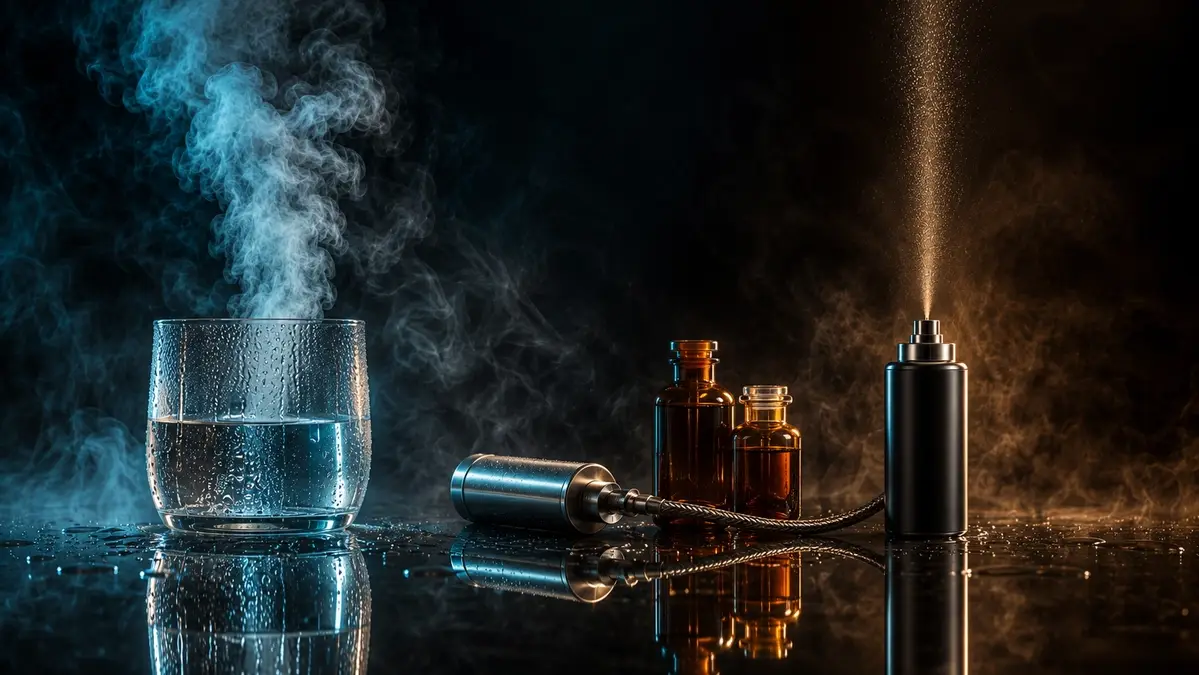
Cold-air vs ultrasonic: why pros never use ultrasonic.
Particle size, oil dilution, and why your ultrasonic diffuser smells weak by lunchtime. The engineering case for cold-air diffusion in commercial spaces.
 Guides
What is scent marketing? A B2B operator's guide.
The commercial case for ambient scent across retail, hospitality, and workplace. What it is, how it works, and why Indian operators are adopting it now.
 Guides
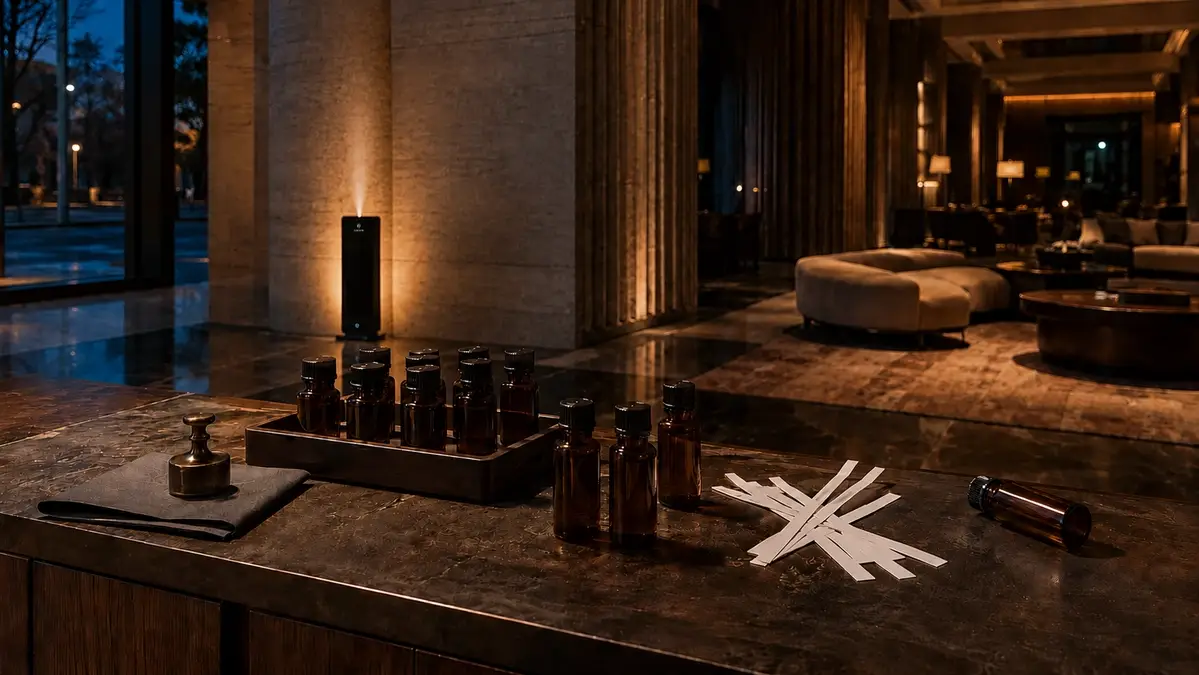
How to choose a signature scent for a hotel without sounding like every other hotel.
A working framework: brand voice in three adjectives, location in one sentence, and the one note you must avoid. Forty hotels later, here is what holds up.
 Science
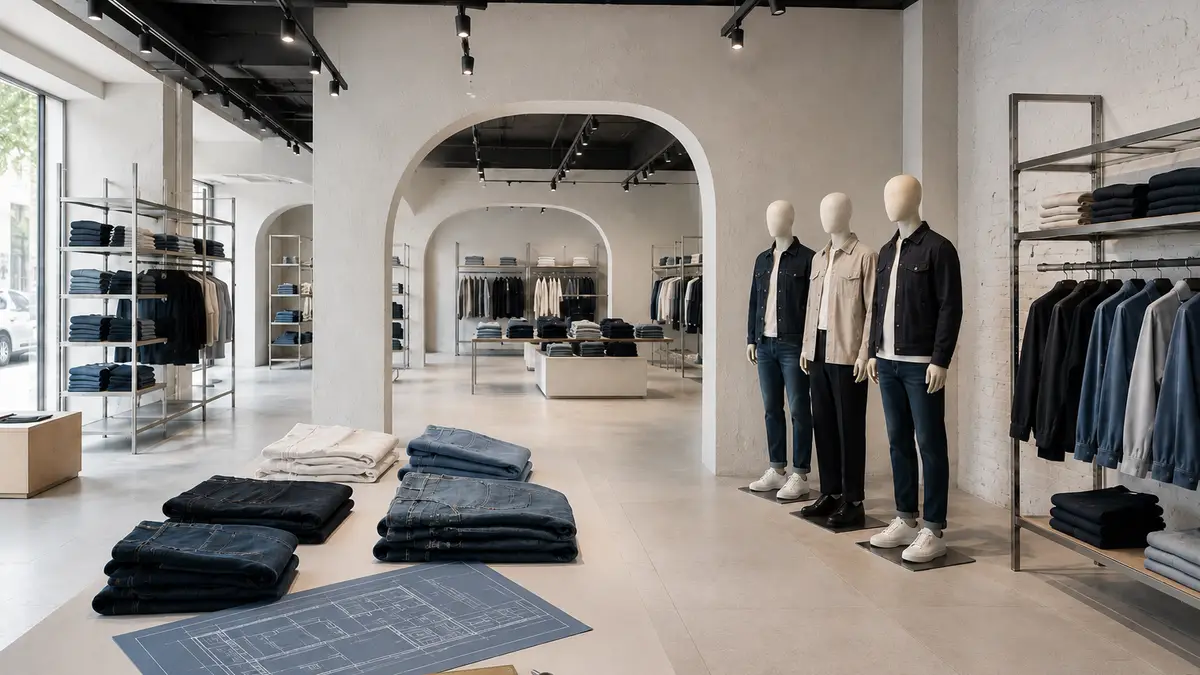
`Sizing a scent system: how coverage numbers actually work`
Coverage figures on a spec sheet describe an empty box, not your lobby. Here is how ceiling height, air changes and door traffic move the real number — and how to sanity-check a proposal before you sign it.
No articles match that filter.